
Heavy Petting
How to touch a cow

Heavy Petting
One of the first things most people do when they meet the oxen is reach out their hands. They want to touch and pet them. My main team, Thor and Odin, are so used to this they just stand there and take it most of the time, but the younger teams always flinch and shy away. It makes sense when you think about it. Cattle, and horses are prey animals. They have evolved a fear response to potential threats, and the human hand is literally the most dangerous weapon on the planet.
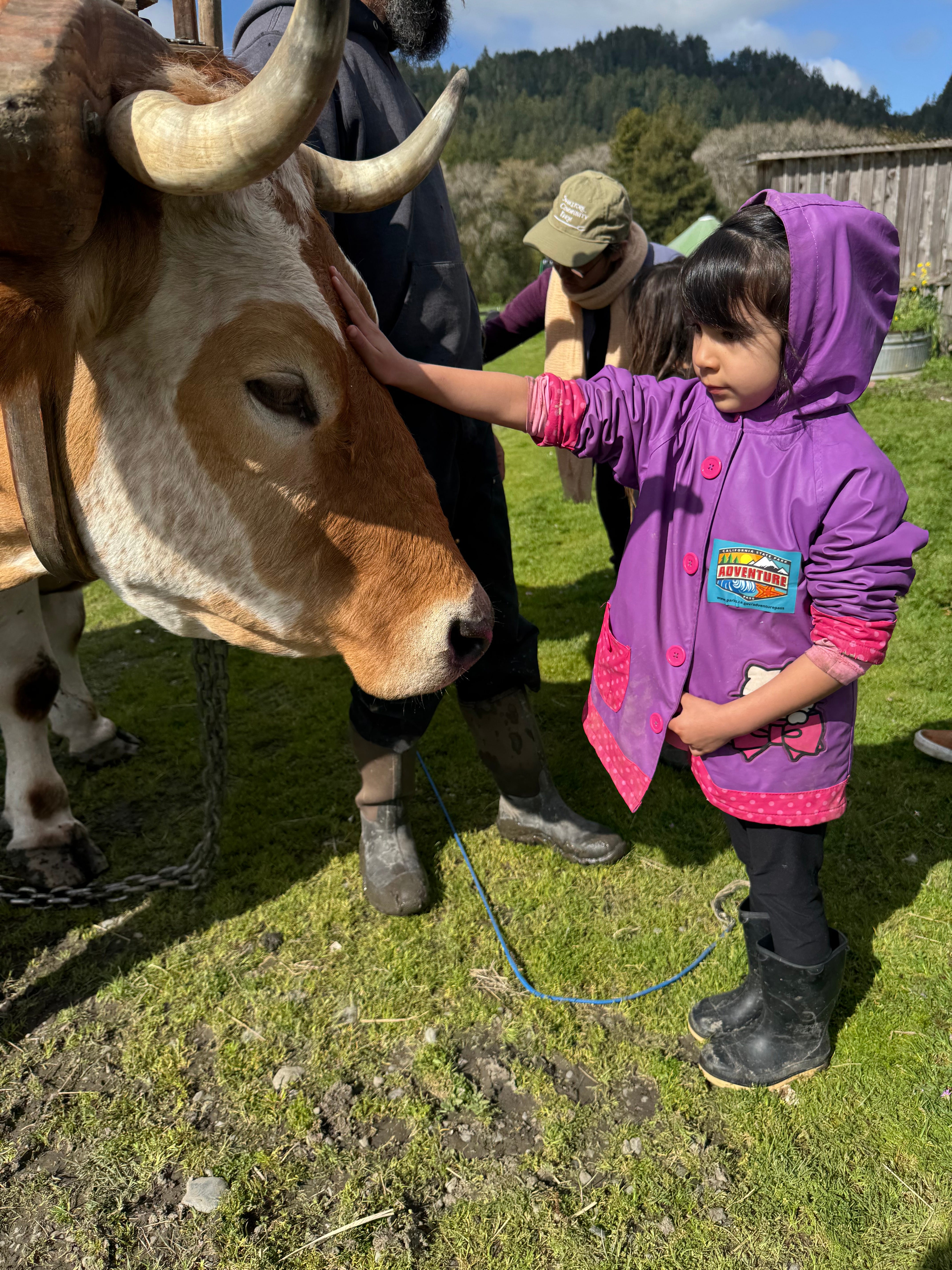
Most modern humans only have experience with companion animals. Dogs and cats are not only domesticated, but they are also mini predators. They are more similar to us in the way they interact in the world. It makes sense that we would share a closer bond with them because they interact with each other in comparable ways. Dogs play with their paws and cats hunt with their claws. Petting dogs and cats is more natural and normal for them because they also interact with each other through their appendages.
When we expand our animal relations to species of prey animals we should be aware of these differences. When you reach out to pet a cow they have every right to think that you are attacking them, because for most of our coevolution that is what they were taught about the human hand. Humans are apex predators and it makes sense for prey animals to be nervous around us. It is our responsibility to demonstrate that we are not a threat. The best way for us to do this is to stand neutrally, don’t make any sudden moves and most importantly don’t try and pet them. Petting a large animal doesn’t calm them down.
It is also not the main way they show affection between each other. Yes, they will occasionally groom one another and this does serve the purpose of bonding, usually family members, together. But if you look at the percentage of the time they are doing this it is very small. Most of the time they are simply standing quietly next to each other, or laying down and chewing a cud together. They share space.
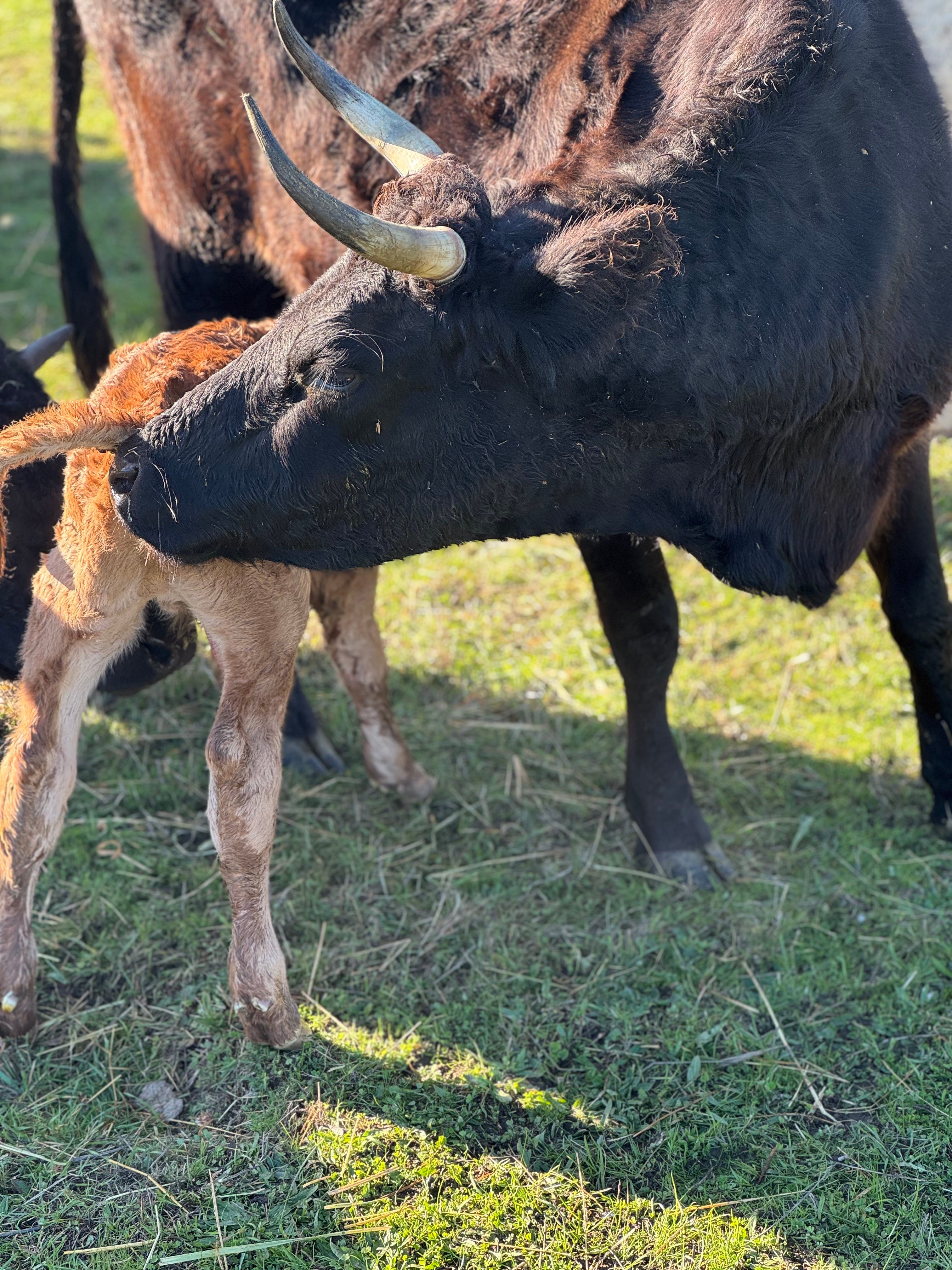
Now once an animal is calm enough for you to stand close to them there is a reason to reach out and touch them. Because it calms you down. Yes, cattle are prey animals, but they also pose a threat to us. They could be dangerous towards us and we are understandably nervous around them. Humans self sooth with touch. A calming hug or touch can adjust our nervous system. When we reach out and pet a large animal it is mostly for ourselves.
Once we have a shared nervous system baseline then the relationship can deepen. It is important to take this step slowly. I still don’t pet my oxen very much at all. I have come to realise that they don’t love it most of the time. They tolerate it. There are also certain ways that it can be useful for them.
I do spend time in the spring grooming the oxen. I use a curry comb that has small teeth on it for removing hair. The bovine tongue has a rough texture similar to that of a cat. They use this not only for grabbing up bunches of grass but also for grooming. This is how they show physical affection between each other. The curry comb mimics this action. But like I said this practice is usually, but not always, limited to close family members. So it is important to have rapport first before starting to groom. You also need to know how to use it because shedding hair can feel good but it also can be irritating for them.
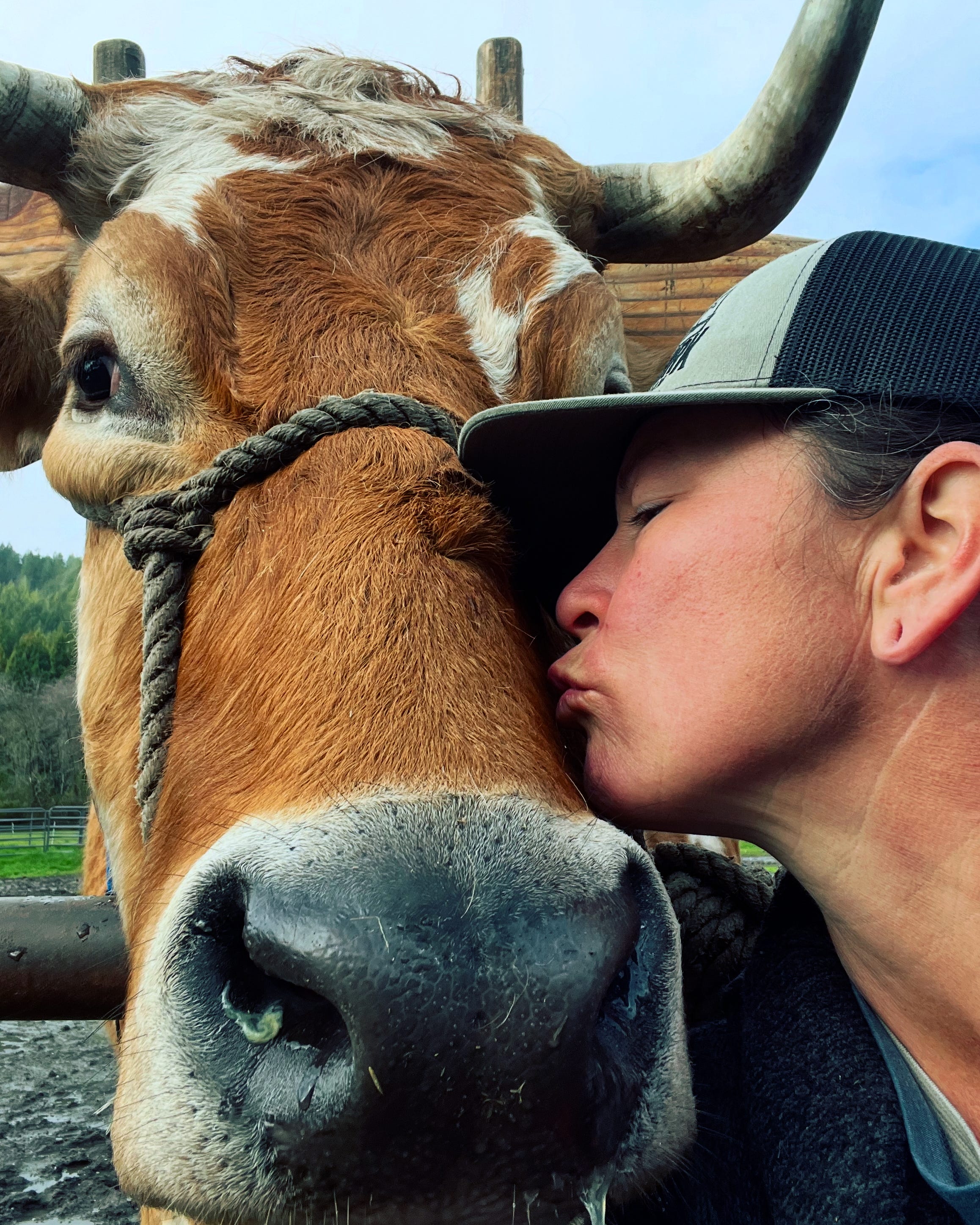
Petting and scratching a bovine can be mutually beneficial if you know where to scratch as well. Simply trying to touch their flank or nose is not the right spot to begin petting them. If you are going to pet them scratch an itch they can’t reach. The best spots are under the chin and along the dew lap. Sometimes they will stretch out their necks and love this scratch spot. Behind the poll is another one. Especially when they have been fed hay in the barn the base of the poll, behind the horns, can accumulate hay seed and get itchy. You have to be careful here because excessive touching around the horns can provoke them to tussle. You don’t want to start up that habit even if it seems playful. The other itch spots are behind the ears and at the base of the tail.
Carefully applied touch in these areas are the best ways to promote trust and bonding. Just don’t expect them to curl up on your lap and purr like a cat. We have to honor that they are different from us in many foundational ways. Cross species relationship is unusual in the natural world, and it has to be approached with humility. It takes an awareness of our own preconceptions and projections. If we project our human feelings onto animals we are sure to get it wrong. Self awareness is essential if we are to have deep meaningful relationships with our animal friends.
Good points, and hard for people to understand. I desensitize any bovine leaving my place to not react when touched. But it is a process involving lots of grooming.
Great post, hilarious title.