
Horns
Why Cattle have them

Horns
Cattle naturally have horns. They evolved to have them and while I understand why some folks choose either to dehorn or raise polled cattle there are important reasons why cattle should have horns. I really like the look of cattle with horns. They just look right to me. Whenever I see dairy or beef cattle without them it feels a bit sad, and I wonder how they feel about it. Sure if that is the only thing they have ever known they can’t know the difference that a glorious set of horns would make.
Let's start out with the question: what are horns? Horns are made out of keratin, the same material that composes your hair and fingernails. In fact at the base of the horn there is a transition zone between the hair and the horn. They grow in a similar way to hooves and fingernails. Depending on the mineral content of their feed the horn wall can be thick or thin. I’ve seen a big improvement in horn development by supplementing with salt and kelp. The minerals help keep the keratin strong. Just like human hair and fingernails can be indicators of health, so too can the cows’ horns.
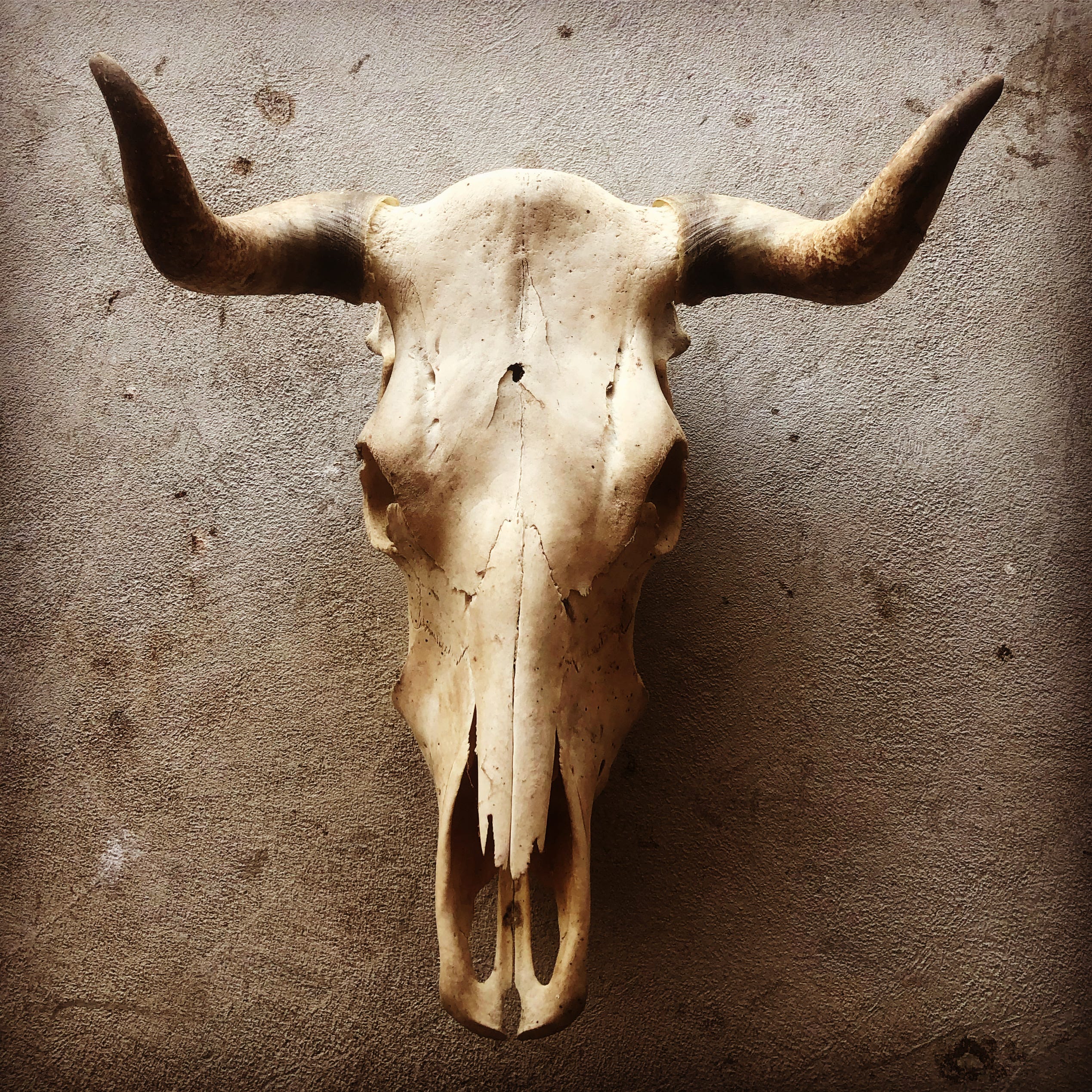
Horns serve a couple of important functions for the animals and without them I have seen negative outcomes. One of the most basic functions for horn material is actually cooling. Most people don’t realize that underneath the hard keratin of the horn sheath is a vast network of blood vessels. The tissue under the horn is alive. The first time someone touches the horn on an ox they usually remark at how warm it is. They might look like cold killing devices but in reality they are a part of the living flesh of the animal. This blood flow helps to cool the animal by putting the blood through the air in a safe and contained way. This also means that if an animal breaks a horn it bleeds like hell. The cooling power of the horn was once poignantly demonstrated with some of the first goats we owned. Veranda was a dairy goat and she was raised at a dairy. Thus she was dehorned when she was a kid. Her daughter Zoe looked exactly like her with the same all black coat except she had her horns. These two all black goats would get hot in the summer heat but only Veranda would overheat. She would be panting and need water thrown on her to cool her down while her daughter was fine standing in the sun. If you were to look at these two animals the only visible difference is the horns. They have a huge impact on cooling down the animals.
Breeds that have adapted to warmer climates usually have larger horns. Think Texas longhorns here. This makes sense because the larger surface area can cool a greater amount. These breeds also need to travel larger distances to obtain food on sparse forage. Which brings us to another reason for horns, locomotion. All bovine movement starts at the horn tip. You can create a wave that travels down the spine of the animal and even get them to move their back legs by grabbing and shaking their horns. I don’t recommend doing this unless you have a very tame animal but I use it as a fascinating demonstration of bovine physiology. As the animal walks they swing their horns back and forth. It’s a lot like how humans swing our arms when we walk. The momentum helps propel us forward and keeps us steady and upright. Long horns on the cattle that had to cross huge expanses of land have developed as a way to help that animal to efficiently cross the landscape. Animals without horns lack that counterbalance and I wonder if they notice it is hard to walk. It would be like walking with your hands in your pockets, it is doable but you would look funny if you had to run.
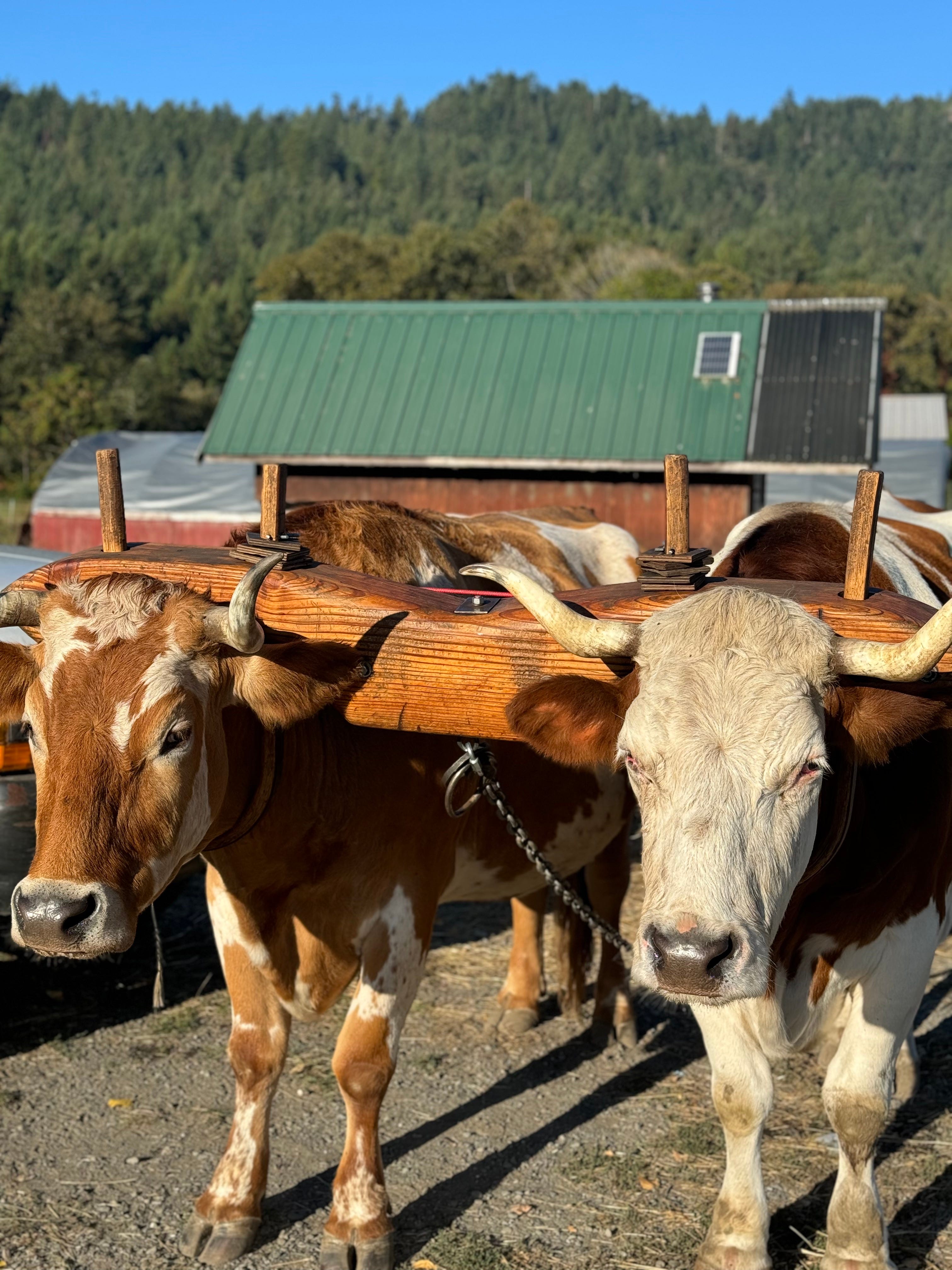
I’ve touched on it in previous posts but another major function of the horns is communication. Certainly a bull with horns communicates a certain message to us humans. “Don’t mess with me.” The horns offer protection as a signal of aggressiveness. But there are more nuanced ways that cattle use their horns to communicate with each other. In fact I would argue they are the main individual identifier within the Bovine language. I had an interesting talk about names the other day. I give my oxen and my dairy cows names, but I don’t often use them. After all that is just what I call any given animal in my language. They don’t really respond to names the way a pet dog might. Verbal names are for us humans; the cattle don’t really care what you call them. To them their name is the unique traits that visually set them apart. Coat color, size, and horn set are how you name an animal in Bovine. Bovine being a visual spatial language the visible characteristics are more important. Each animal has a unique set of horns and that is more likely to be their name. By removing their horns you remove their individual moniker and identity.
The way cattle communicate with their horns is key to their social hierarchy and status within the herd. The most dangerous dairy cow that I ever had to work with was a hornless animal that was raised in a horned herd. She had to overcompensate with her head movements and this made her dangerous to work around. She would swing her head into your gut if you weren’t paying attention. This is because she had to “yell” for attention within her herd. Her lack of horns made it difficult for her to afford the respect she thought she deserved.
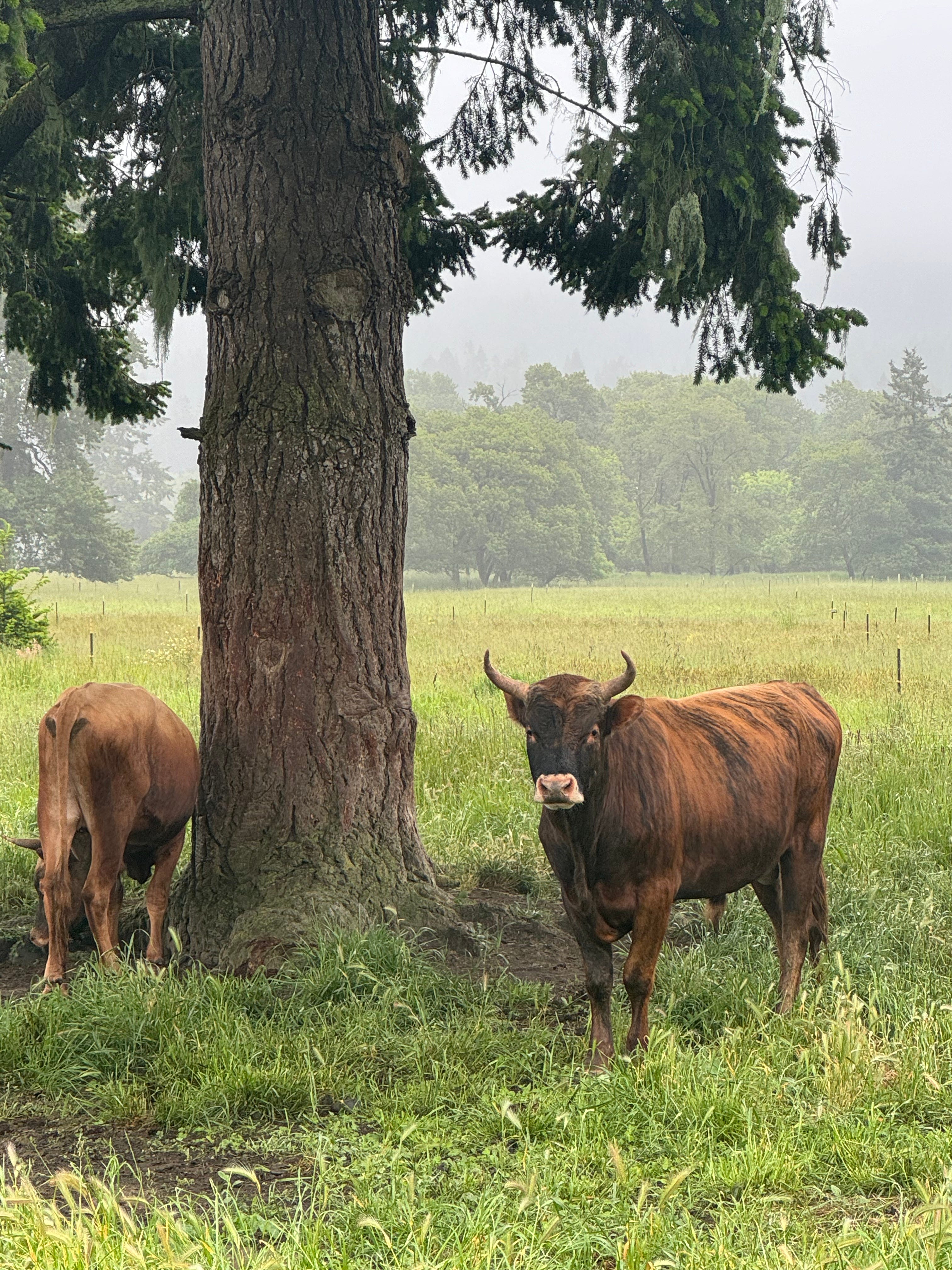
It is important to remember that horns can be many things but ultimately they are for protection. Both cattle and horses evolved as prey animals. Horses who evolved on the great Eurasian steppe grasslands developed large hindquarters and hard hooves. They are designed to run away from predators. Cattle on the other hand who evolved in a more mixed grassland and forest ecosystem were designed to turn and fight. They have horns, split hooves for traction and looser ligamentation. The classic image of a fighting bull turning to attack a foe is how cattle are meant to move. We have to be aware of that when we work with horned cattle. Horns can be dangerous but they are so much more than just that. Cattle with horns are a beautiful thing. They must be treated with respect but I will always have horned cattle.
I love horns on the cattle and I’ve been breeding to create my seed herd of horned A2A2 Jerseys, which my AI guy thinks I’m crazy for and I had to buy special seamen bc dairy breeds now have polled genes on each side. The dairy cows will no longer be producing horns which is sad to me and we don’t really know the implications that could have on the milk or meat. We need to stop messing with genes and just let cattle be how God intended and that’s with horns. Last year I bought a jersey from the Tillamook dairy selling bc one of her horns ended up growing in even though they were burned off. She has been working through an equilibrium imbalance and it’s been the weirdest encounter I’ve ever had with a cow and this factor makes her dangerous. She has came a long way and now can walk in a straight line but it took so much training. She holds her head in a weird imbalanced way still and the side missing the horn is overly sensitive and you can never approach her on that side or walk her on that side she gets weird if you do. Make me sad that she still suffers from this and the damage has been done all I can do is help her work through it and she has tested every ounce of patience I have and has been my greatest challenge. I’m now milking her she is being very cooperative 🙌