
Rumination
Chew on this

Rumination
I was listening to a really good podcast the other day, by Chris Williamson, but I was struck by the use of the word rumination. The idea was sound. We get stuck in loops of worry and “rumination.” Running a certain scenario over and over in our heads. As a cattle farmer I can’t help but laugh. I know they mean that rumination equates worry and anxiety, but to me rumination is a positive trait not a negative one. I wonder when that connotation got switched over.
Rumination as I know it is the process of working a cud. This is the way in which a ruminant animal, one that has a rumen, consumes low nutrient feedstocks like grass. The rumen is like a big fermentation vat and the contents of it need to be re-chewed in order to fully break down the cellulose in the plant fiber.
If you think about it, the way a cow eats is kinda like magic. They are prey animals so it is imperative to consume as much as possible as quickly as they can. Cattle use their dexterous tongue to wrap up bunches of grass and then they cut it off using the sharp incisor teeth on the bottom of their jaw. They don’t have teeth on the top of their mouths up front, just a soft pallet. They do have top and bottom molars for grinding the cud but we’ll get to that later. A cow's tongue works kinda like an elephant's trunk grasping and ripping the grass in large bunches. This is quickly swallowed and held in the large storage tank of the rumen.
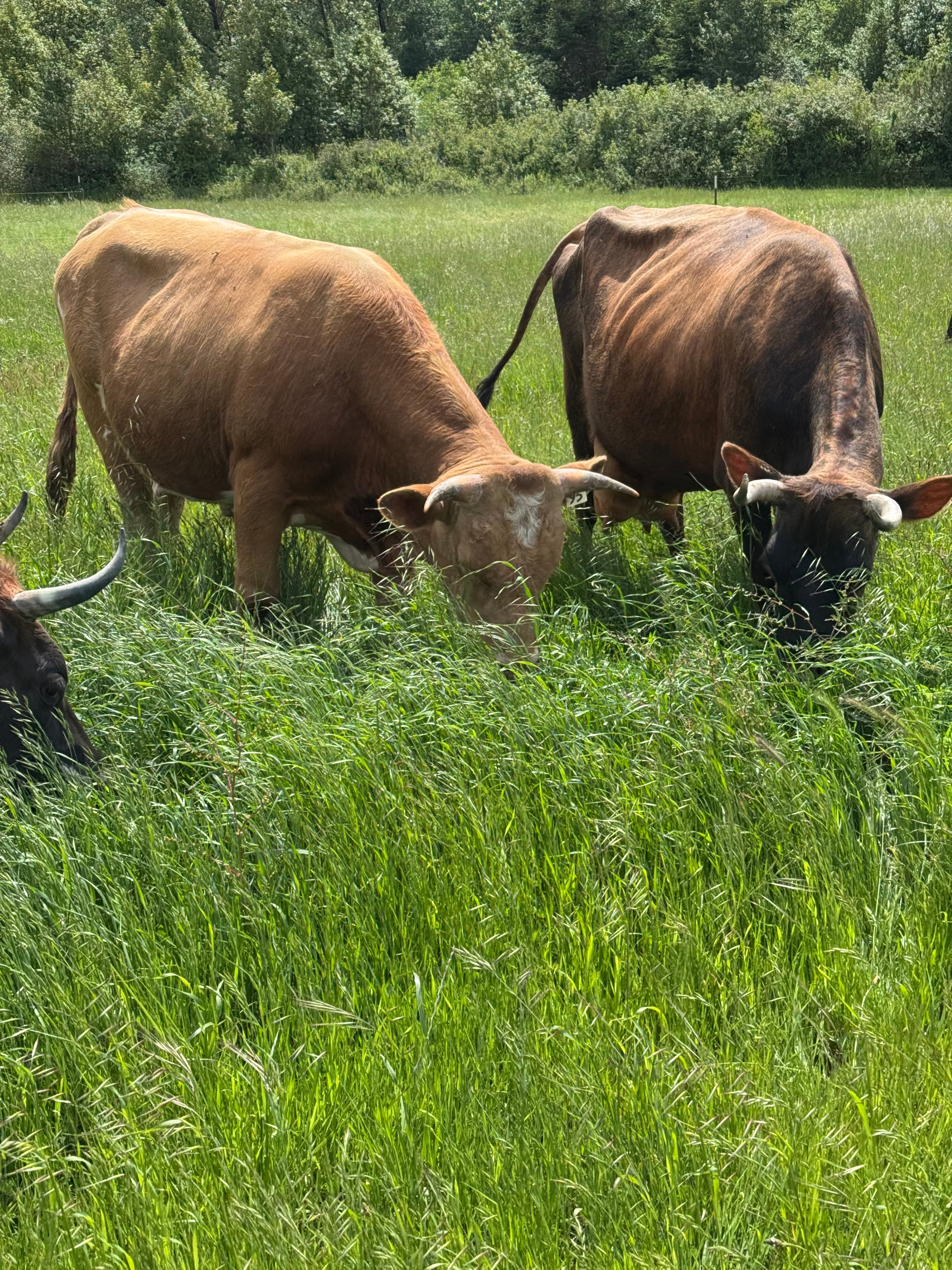
A good activity to see how much feed a certain pasture will provide is to take a large contractor style garbage bag and try to fill it up by ripping up grass and stuffing it in there with one hand. How long does that take you? That is a good estimation of how productive a particular field will be. This is essentially what a cow needs to do every day.
Once the rumen is sufficiently full then the animal can retreat from their risky position out in the open to a safe place to chew their cud. This is now their full time job. Cattle must chew a cud for about eight hours a day. Chewing a cud, or ruminating, is a peaceful activity done in the safety of the forest. The ideal is a shady spot under a tree surrounded by your friends and family. A picture of a cattle ruminating is one of contentment and peace, not the stressful and worrisome picture that humans think of when we ruminate.
After the cud is chewed on sufficiently the cow will use that substrate as a base to grow the microorganisms that are actually what produce the food they eat. Honestly the cow mostly lives off the byproducts of the fermentation in their gut. Healthy gut bacteria are essential for all animals but doubly essential for ruminants. Grass is low in nutrients but high in fiber so the animal uses that to their advantage with the multistage digestion process. Honestly it is magic.
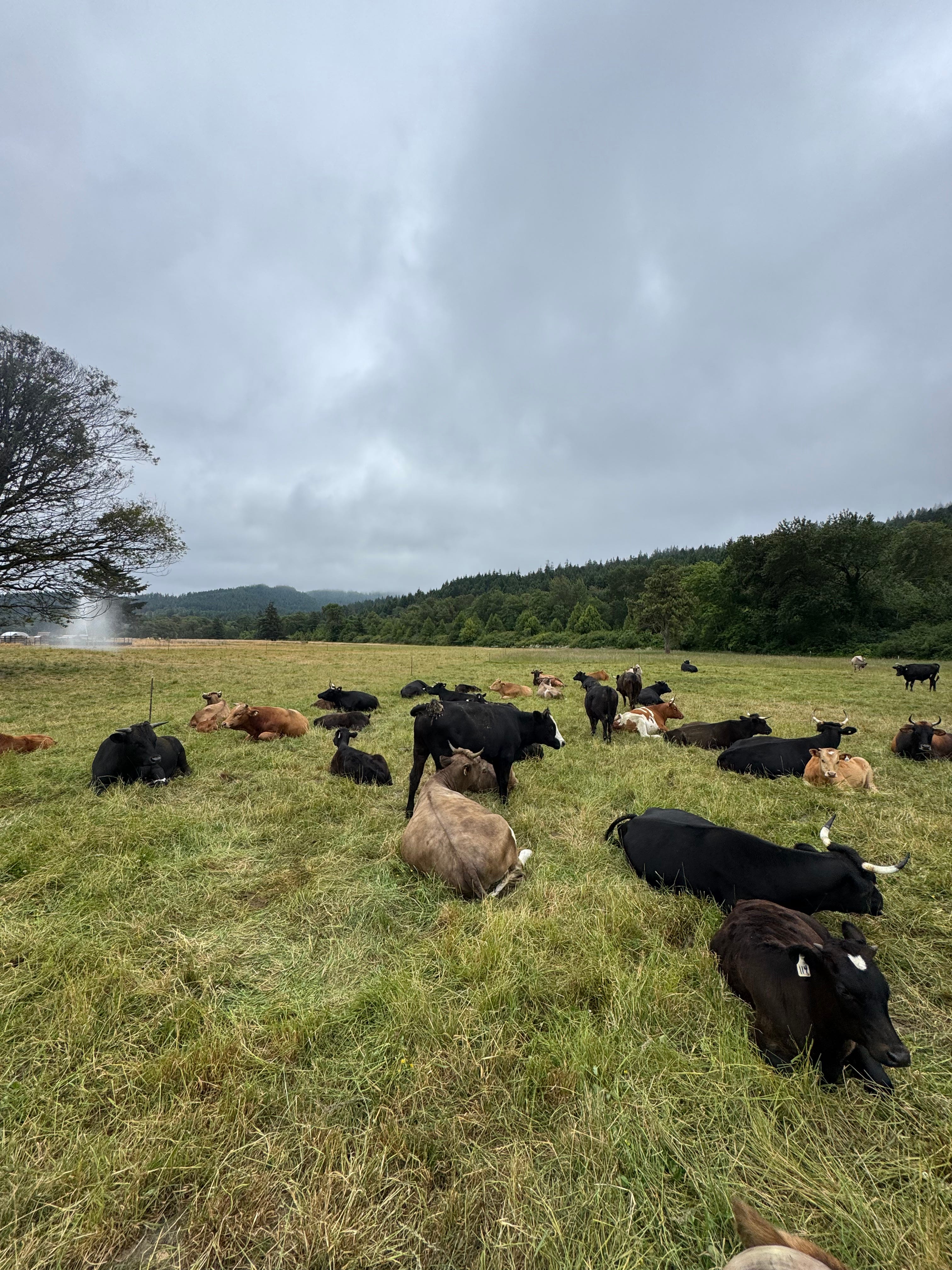
Maybe we need to change our view on rumination. For humans we don’t want to get stuck in cycles of worry and anxiety but if we look at the cow peacefully chewing their cud maybe we can reframe how we think about our inner mind. When a cow ruminates it is taking something of low value and turning it into something of high value. Cattle transform nutrient poor grass into nutrient dense meat, milk, and manure. It is a magic alchemy that requires time chewing and biological diversity. So if we are stuck on our thoughts maybe we just need another perspective to inoculate our minds. After all the cows can’t just rely on the grass they need the help of the myriad of microorganisms in their gut as well.
If we are stuck cycling on our thoughts the best thing to do is bring in help from the outside. Find somebody else to chew on the idea for a while. When we look at cattle, rumination means sitting with your friends and family under the shade of a tree chewing on that day's work. I think we should do the same, after all, we can't do this alone. Food for thought.
This is a literary masterpiece, not unlike something Wendell Berry would right. I will commit your reflections on rumination to memory. Why? because psychologists dismiss rumination as a kind of feedback loop, in which the agent gets trapped in a mental merry go round from which they cannot get off. But perhpas we are ruminating, just processing things untill we make a break through. Perhpas, like cattle, we just need a herd to relax with in the shade with to ruminate.
I disagree with his definition of ruminating. When I ruminate, I find a quite place to think through a problem or a challenge. To me, ruminating is more like meditation in a way. But as I have an introvert personality, I enjoy those quiet times of thinking and reflection.