
String Theory
Farm String Theory is not quantum but it could be more impactful on your life.

String Theory
Farm String Theory is not quantum but it could be more impactful on your life. I have a theory that includes all of the linear objects we use on the farm. We use a lot of “strings” everyday. Hoses, electrical cords, irrigation lines, ropes, baling twine and electric fences all qualify as “strings” in my definition. Any linear object that is rolled up, laid out, rolled up and used again. Every farm, heck, every household has many of these that they have to deal with on a daily basis. They are a source of usefulness as well as a suck of time when they get tangled. Ask anybody who has unknoted an extension cord or had to find the kink in the hose. You can spend valuable time fixing these issues when you could be doing any number of other things.
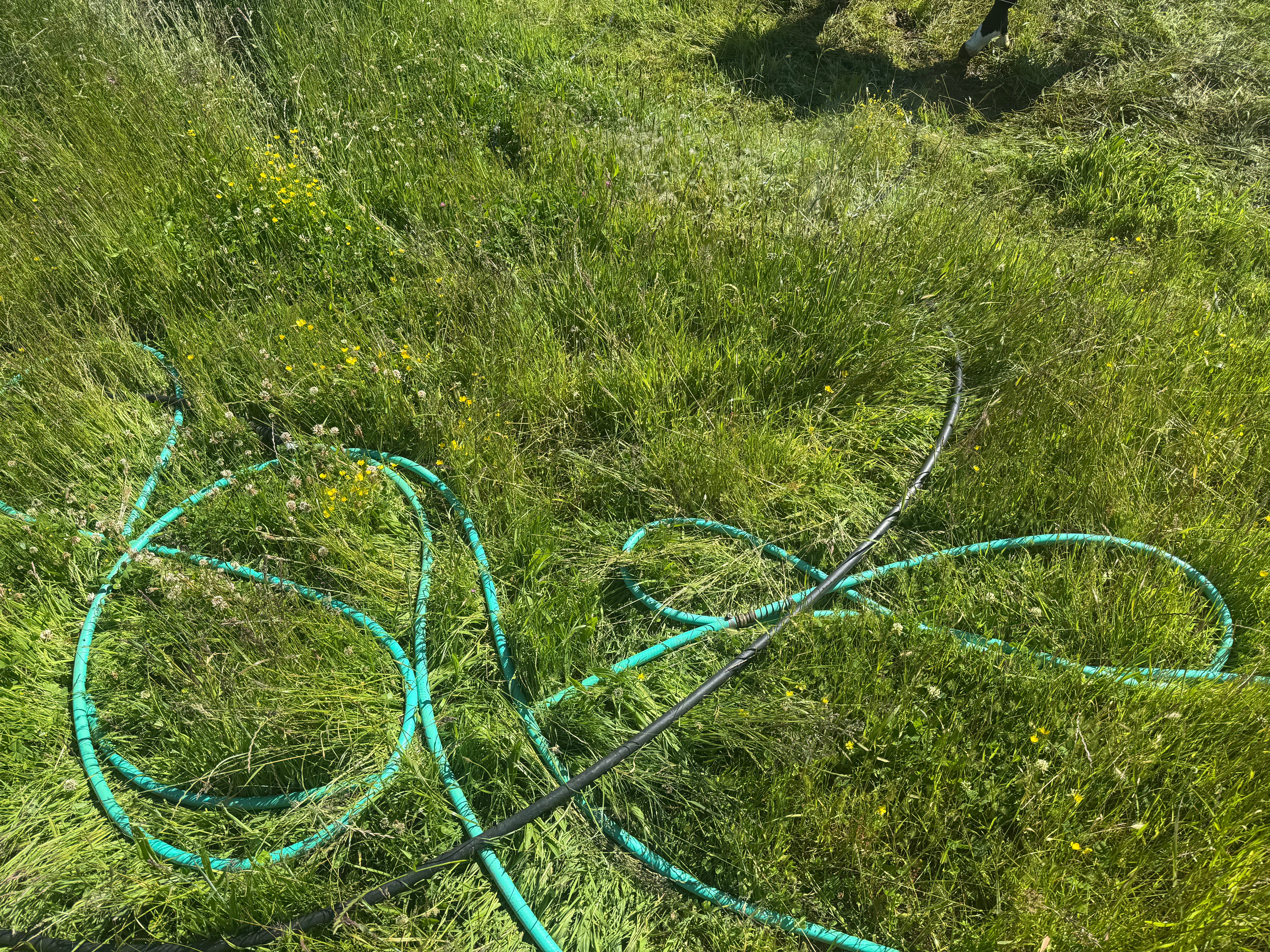
This is where Farm String Theory comes in. I even have equations to explain it. Every linear object has a tangle factor, let’s call that T. Tangle factor is defined by the length (L) of a linear object divided by the diameter(D). The basic equation looks like this.
T = L/D
Tangle Factor is a ratio of length to diameter. As length goes up and diameter goes down, the tangle factor goes up. We all know this intuitively. 100 feet of rope is less likely to tangle than 100 feet of string, also 1 foot of rope or 1 foot of string is less likely to tangle.
So far this is all pretty basic but here is where it gets interesting. All “strings” aka linear objects can exist in two different states. There are strings on the reel and there are strings off the reel. Think of thread on a bobbin versus off the bobbin. They exhibit very different properties in the two different states. A string on the reel is in a stable and resting state; it is stable and full of potential. A string off the reel is subject to tangle factor and has the potential for chaos. You buy a new hose and it is tightly coiled in the package. It looks so neat and tidy, but as soon as you unleash it it can become a tangled mess.
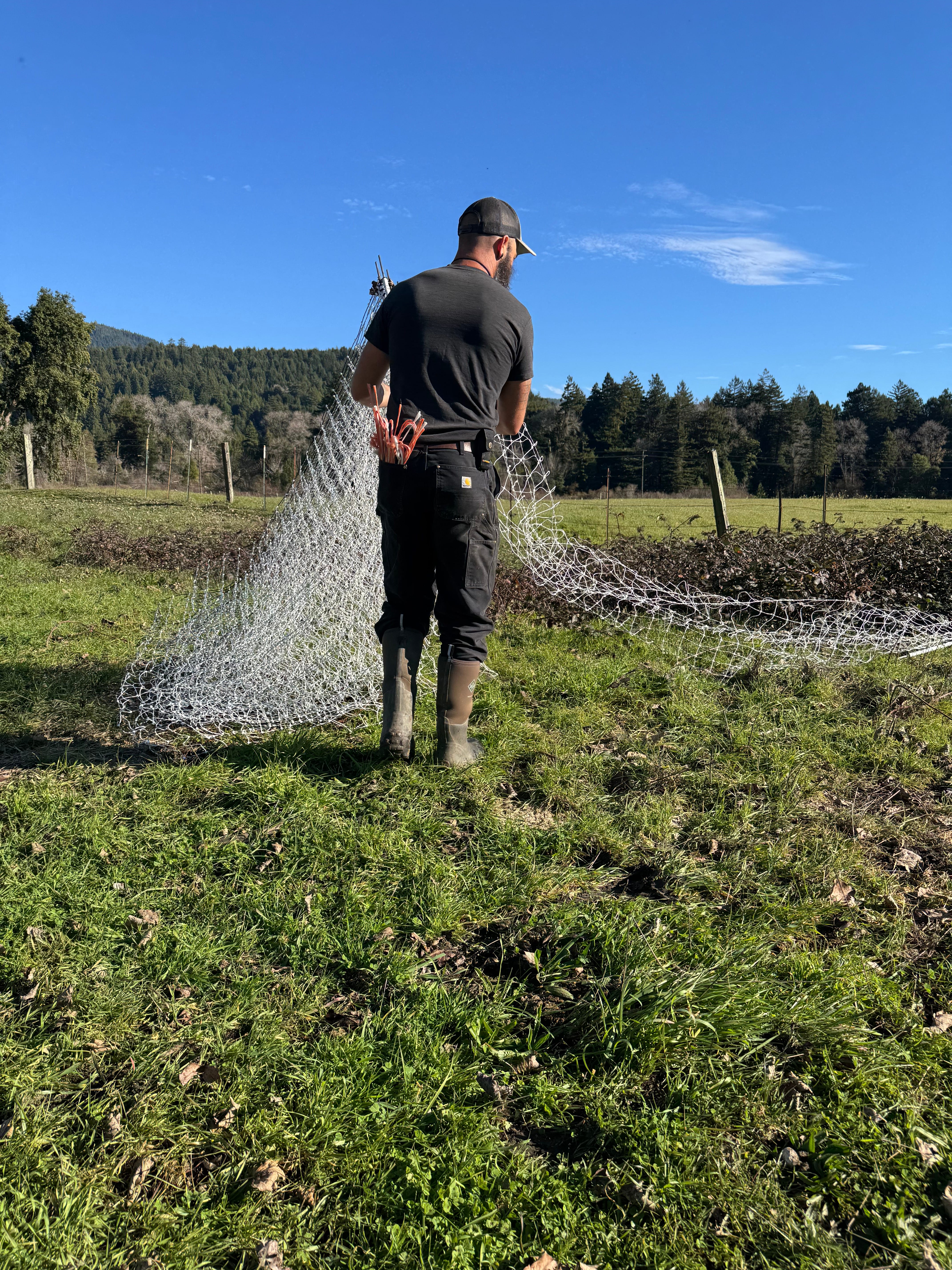
When dealing with all linear objects you will have to coil that string at some point. You lay out the irrigation line or the electric fence and at some point it will need to be recoiled. The coil size you use is critical to your success at doing this and your future sanity. For strings off the reel and in their more chaotic state the coil size should be determined by the tangle factor. The coil size(C) is directly proportional to the tangle factor.
C∝T
As the tangle factor goes up the coil size should also go up. This will help eliminate tangles. Now there is a minimum coil size that is practical for each object. Yes a very large coil size might eliminate the tangle factor but it might also be impractical. So you need to find the minimum realistic coil size. But this size will be larger than the coil size when the string is on the reel. This must be adhered to.
Strings on the reel can be coiled in much smaller coil sizes. Without mechanical advantage you are never going to get that hose rolled up to its original size when you bought it so don’t even try. The most egregious violation of this I often see is somebody rolling up an electrical cord between the hand and elbow. Don’t do this; it defies the laws of string theory. Don’t coil a hose in less than a three foot loop. It will kink. And for crying out loud if you have more than three hundred feet of something get a reel.
You want to make the strings work for you, not the other way around. If you find yourself working too hard to untangle the hose you have violated string theory. If your hose is kinked and your cord is tangled return to first principles. Tangle factor increases as length goes up and diameter goes down. This means you need to make a larger loop. Entanglement is a real danger.
Thanks, Kev, for applying this theory expertly in untangling the coils of rope in the church garage. There may be a spiritual dimension to string theory about staying flexible and open and not being too tightly coiled.
My father hated whenever I went out and flew a kite. My inability to properly reel in the string and always bring home a kite and a pile of knots led him to believe I could cause any linear object to knot simply by looking at it.