
Why Oxen
are they even cattle anyway?

This is one of the questions I am most often asked when people come to the farm. Why do you use oxen? In many ways this is both an easy question to answer and a difficult one at the same time. The easy answer is because it works. I still remember the first time I put a set of calves in front of a small sled with a rock on it. They weren’t even a year old at that point and this was a small load for them, but they dug in and instead of submitting to the weight on the sled they pushed against it with their shoulders pulling it with an intensity that startled me. It worked, plain and simple. I had been training this team of claves for a few months to work together in the yoke and they had learned the basic commands to step up, whoa, gee and haw, but I had never yet tried to pull anything with them. That first pull is why I continue to work with oxen. It was exhilarating to feel them push into the load and together we accomplished our first task of moving a stone from one place to another. From there it simply became a matter of finding new and exciting things to pull with them. The complexity evolved from there and now we do almost all of the heavy lifting on the farm with our teams of oxen.
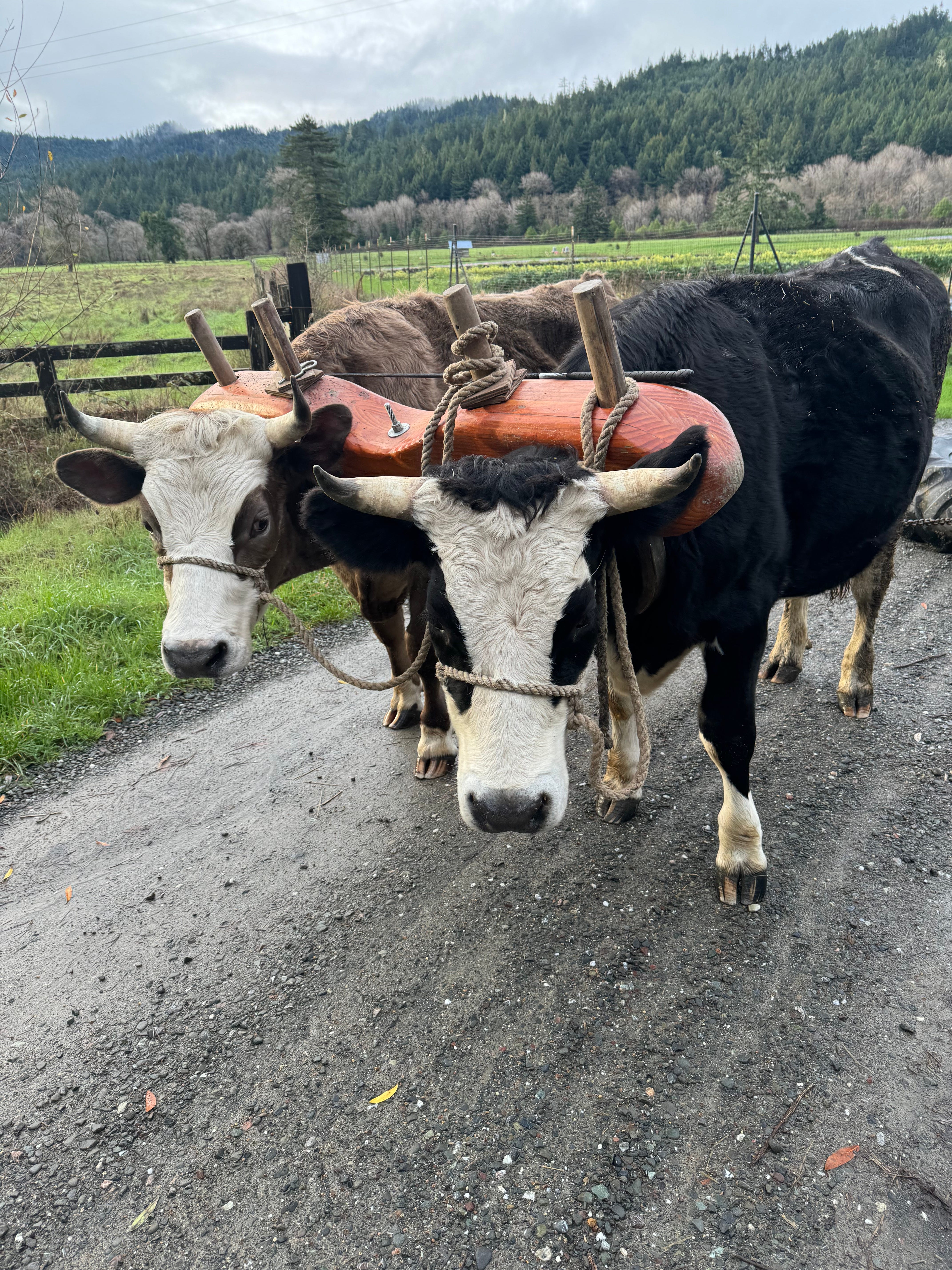
In order to answer the more difficult part of the question, why oxen?, we must first understand a few definitions. Let’s start out with, what is an ox? This can be confusing for some people. They might think that an ox is a specific breed of cattle or even another species altogether. There is a species of ruminant called a musk ox that is endemic to the arctic tundra. This might be why some folks think that oxen may not even be cattle. The correct answer is that oxen are not a specific breed of cattle, any breed can be trained to be oxen, but some are easier than others. I prefer to use dairy breeds because they usually have horns and they don’t flesh out too easily. Nor are they a separate species. Here in North America and most of the western world oxen are mature castrated male bovines that are trained to work. In other parts of the world working cattle can include intact (not castrated) bulls as well as cows. In fact working cattle are the largest class of draft animals still in use around the globe. I like to think about it more like a job title rather than a class of animal. Just like I am a farmer my cattle are oxen and we both have jobs to do.
On our farm we start raising our oxen by selecting a group of bull calves from which to pick the very best to become oxen. We are lucky to have access to some of the best dairy farms in the country here in Humboldt county. A shout out to Alexandre EcoDairy for providing us with some of the best calves we have turned into oxen. I like working with large dairies because they have so many calves at once. If I get to pick the best looking bulls out of 500 calves I am more likely to get the very best. From the group of four calves that I select I will pick the best two and train them to be my next team.
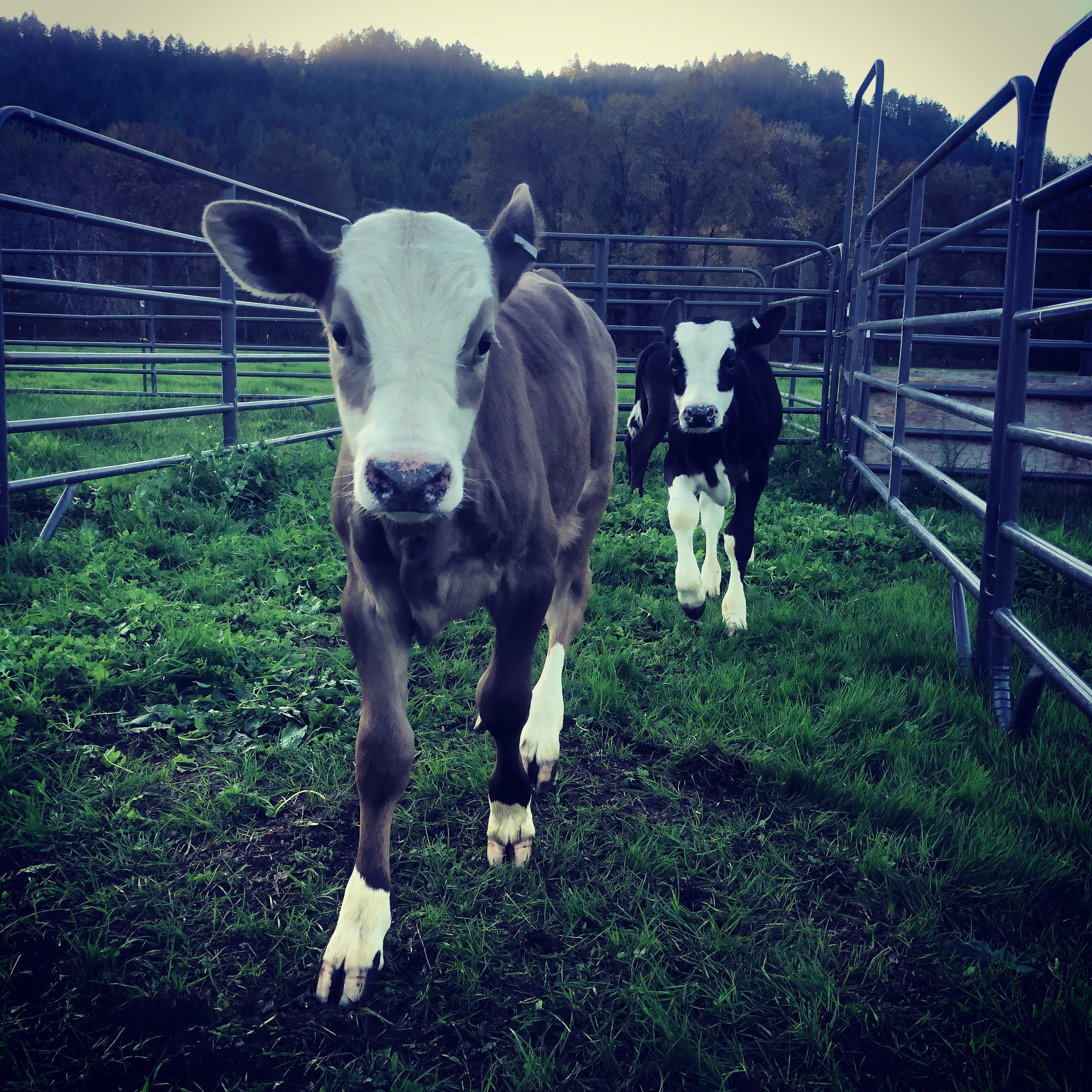
The oxen are always grazed and housed separately from the main herd. That way I can have time to train and work with them. They are also integral in our fertility program, because they supply the manure for our composting operation. During the winter we muck the stalls daily and compost the bedding. This time means our oxen are handled everyday and learn manners. The compost is then saved for next year's garden. Our farm is oxen powered in more ways than one.
Oxen are the elite athletes of the cattle world. They are the best of the best. It is important to think about them as athletes because it helps us understand how to train them. They need good nutrition to perform at their best. Certainly no human athlete can get by on junk food. This will inform our feeding regime for raising and maintaining oxen. They also need exercise and training to perform optimally . In order to pull large loads they have to develop strength and the mental fortitude to persist when it gets heavy. It is amazing to see how much of the work is mental rather than physical. We all can do much more that we think we can. With training you gain the confidence to actually use the strength you have.
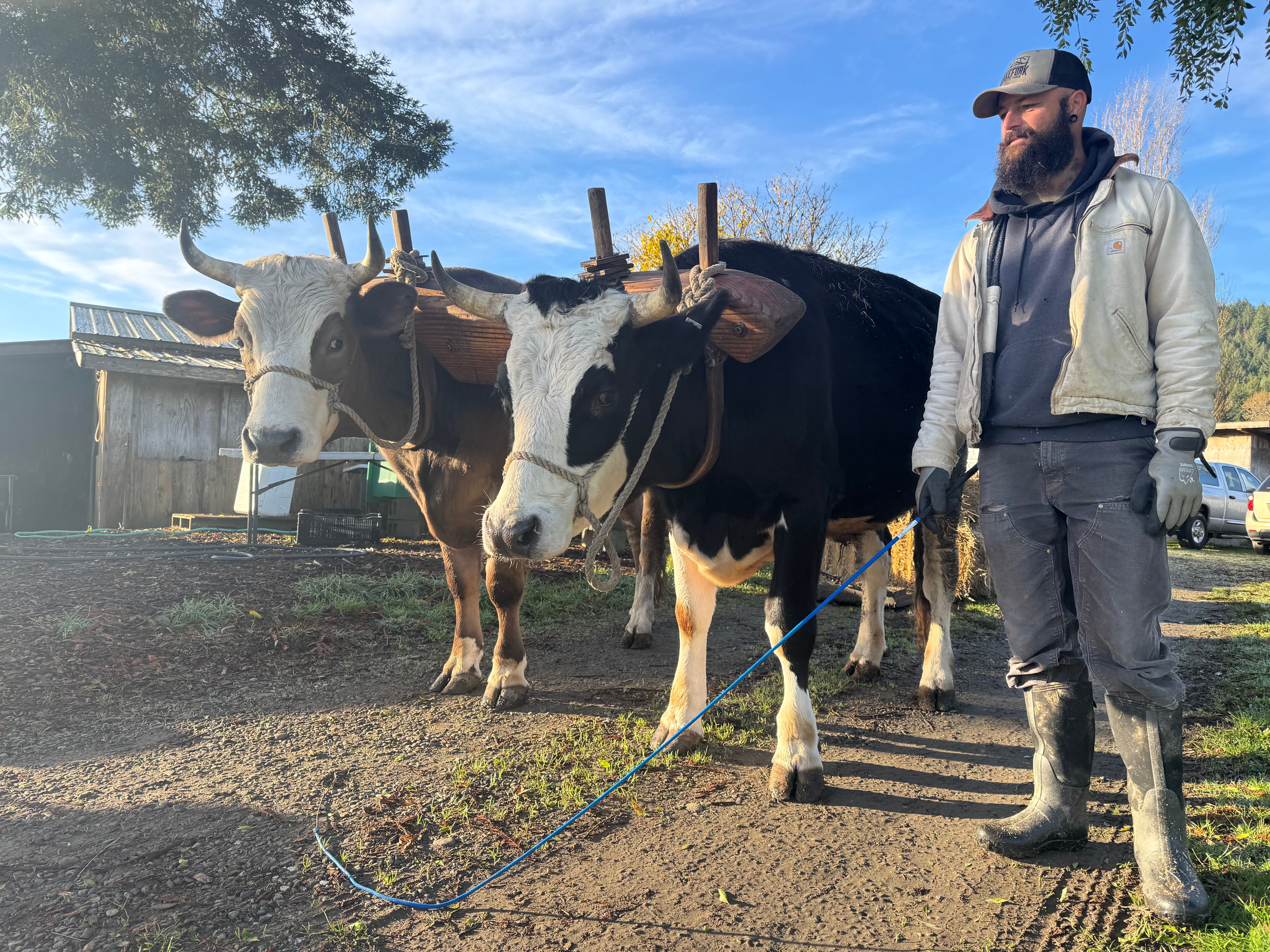
I think the reason I continue to work with oxen is because of the relationship. I will never have the same kind of relationship with my tractor than I do with my oxen. It is an intimate working arrangement that is years in the making. It takes four to five years for working steers to mature into oxen. If you have been working and training alongside them that whole time it is impossible to not become connected to them in ways that are unusual and deeply important in our disconnected and fragmented society. They are partners in this work and our relationship has been forged through daily toil, struggle and success. This is why I use oxen. We work together to better ourselves and the world around us.